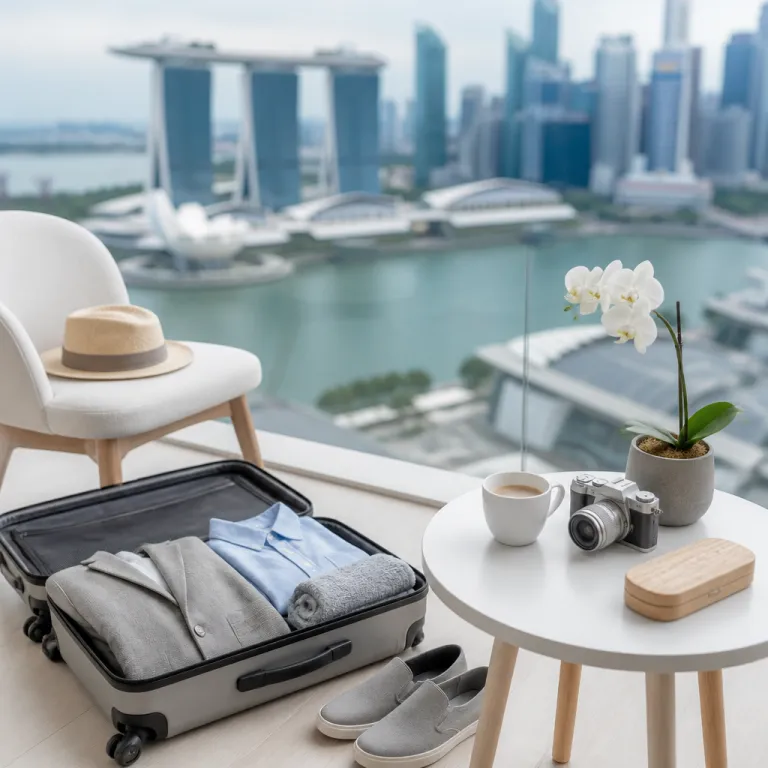
From boardroom to bayfront: setting up your Singapore bleisure base
Your Singapore business-leisure stay really starts the moment the final panel wraps. This is when the balance between work and downtime quietly shifts and the city’s precision-engineered hospitality becomes your personal operating system. Think of the next 72 hours as a carefully edited portfolio of experiences rather than a rushed checklist.
The first decision in any serious bleisure strategy is simple yet crucial. Do you stay in your existing Central Business District hotel or move to a more resort-focused address, accepting the time lost to packing, traffic and another round of check-in formalities? For most executives extending business trips, remaining in a well-located CBD or Marina Bay property is the smarter use of limited time and gives your leisure extension a calm, anchored base.
Singapore’s compact size and efficient MRT network mean you can treat the whole city as your extended lobby. Public transport handles the heavy lifting for your travel booking logistics, while taxis fill the gaps between late-running meetings and dinner reservations. As local travel vloggers often advise, use the MRT for efficient travel and save taxis for late nights or tight connections; a typical central ride might cost around SGD 10–18 and take 10–20 minutes, depending on traffic.
For a future-facing view of the travel market, watch the riverfront around Robertson Quay. New and refreshed hotels along this stretch signal how global brands now design specifically for bleisure travellers in CBD-adjacent neighbourhoods. Properties here sit at the intersection of corporate travel needs and a softer leisure rhythm, with cafés, galleries and jogging paths replacing only boardrooms and ballrooms.
From a market analysis perspective, Singapore’s hybrid business-and-leisure segment sits inside a wider global travel market that has shifted away from rigid work–life separation. Executives from North America and the wider Asia Pacific region now treat business trips as modular products, adding leisure days when the forecast for workload allows. This has changed hotel market segmentation, pushing brands to refine their service portfolio for both business and holiday guests within the same property.
For you, that means looking at a hotel not only as a place to sleep between meetings but as a complete travel product. You want a property whose amenities, from spa to concierge to in-room technology, work equally well for corporate travel and slow mornings. When you compare options online, focus less on generic market share rankings and more on how each company’s service design supports a three-day pivot from business-trip intensity to leisure-trip ease.
Day one: recalibrating pace within a CBD radius
The first post-conference afternoon is not for ambitious sightseeing. Your body is still in business mode, your inbox still humming, and a blended work-and-play stay only works if you respect that transition. Start by stripping the schedule back to a tight radius around your hotel, using short walks and minimal MRT hops rather than cross-island odysseys.
Think of this as the half day where you test how your chosen property really performs as a leisure-friendly business base. A strong hotel will feel like a well-curated travel services hub, with a concierge that understands both corporate travel patterns and where to send you for laksa at 15:00. This is where the quality of the company behind the hotel brand, and its global portfolio of city properties, quietly shows.
From most CBD hotels you can reach the National Gallery Singapore in under 15 minutes by taxi. The building’s cool granite and glass, plus its collection of Southeast Asian art, offer a gentle decompression from fluorescent conference halls. The gallery typically opens from late morning to early evening, and this kind of nearby cultural stop is a key differentiator for Singapore’s business-plus-leisure scene, because it turns dead time between meetings and dinner into something genuinely restorative.
Walkable from several major office towers, the House of Tan Yeok Nee has been reborn as a cultural and dining complex. The 140-year-old Teochew mansion now hosts Loca Niru, a fine-dining restaurant that feels like a quiet rebuttal to generic hotel banquets. Booking an early table here through your hotel’s online concierge is a precise way to signal that your work–life rhythm has shifted from obligation to pleasure.
If you are travelling with a partner or family joining after the conference, treat this first afternoon as a soft opening for the group. Keep the travel party small, stay close to the hotel, and let everyone adjust to the humid 30 °C air before more ambitious excursions. For more structured ideas on how to stretch a premium budget while keeping standards high, study this detailed family itinerary that still buys real luxury.
Behind the scenes, the travel market has already priced in this kind of behaviour. Share analysis from major hotel groups shows that segments mixing business and leisure now account for a growing slice of demand in urban destinations. When you look at your own forecast travel calendar, it makes sense to treat Singapore as a key market where one well-planned extension can replace several rushed leisure trips later in the year.
On a practical level, keep your travel booking tools aligned across online and offline channels. Use mobile apps for quick restaurant reservations and MRT route planning—the Downtown and Circle lines are especially useful for CBD stays—but lean on the hotel’s human équipe for last-minute changes or special requests. This hybrid online–offline approach is where premium travel services still outperform algorithms, especially when you are trying to salvage a delayed afternoon into a memorable evening.
Day two: cultural depth and neighbourhood circuits
By the second full day your energy has usually caught up with your ambition. This is when a Singapore bleisure itinerary becomes less about recovery and more about curiosity, and the city’s compact geography works entirely in your favour. Plan a sequence of neighbourhoods rather than isolated attractions, so your time flows rather than fragments.
Start with Kampong Gelam in the late morning, when the light is soft and the cafés are just filling. From many CBD hotels it is a 10- to 15-minute taxi ride, short enough that it still feels like an extension of your business-travel radius. Wander past the golden dome of Sultan Mosque, then cut through Haji Lane’s murals and independent shops before the crowds arrive.
From there, a quick MRT hop takes you to Chinatown or Little India, depending on your mood and the group’s appetite. This is where the city’s market segmentation is not theoretical but edible, with hawker centres offering everything from Hainanese chicken rice to South Indian thali within a few hundred metres. For a deeper read on how Singapore’s cultural investment shapes the hospitality scene, the piece on the city’s culture bet and what it means for your next stay is essential context.
In the afternoon, step back into air conditioning at the National Gallery or the Asian Civilisations Museum. These institutions are not just rainy-day options but key assets for high-end urban tourism, giving executives a way to add intellectual texture to otherwise transactional trips. They also sit within easy reach of major office towers, which matters when you are still half tethered to your inbox.
From a global travel market perspective, this kind of layered day is exactly what drives the rise of bleisure travel. Instead of flying in and out for a single meeting, travellers from North America, Europe and the wider Pacific region now design itineraries where cultural depth justifies the carbon and time cost. The result is a shift in market share towards destinations like Singapore that can deliver serious business infrastructure and serious leisure in the same compact footprint.
For your own planning, think of each neighbourhood as a different product within your personal travel portfolio. Kampong Gelam offers street-level creativity, Chinatown delivers heritage and food, while Little India brings colour and sensory overload. Rotating through them over a single day keeps your travel group engaged without exhausting anyone, especially if you punctuate the heat with café stops and short MRT rides.
As evening approaches, return to your hotel to reset before dinner. This pause is not wasted time but a deliberate work–life boundary, allowing you to answer messages, change clothes and mentally shift gears. In a city where the average MRT daily ridership reaches well into the millions, choosing when to step back from the flow is as important as choosing where to go next.
Day three: full day excursions from a business hotel base
The final full day is when you can stretch the map. With meetings behind you and jet lag mostly tamed, a Singapore work-and-play stay supports a more ambitious excursion without feeling like overreach. The key is to choose one major destination and commit, rather than scattering your time across multiple half-formed plans.
Mandai Wildlife Reserve sits about 30 minutes by car from the CBD, close enough for a day trip yet far enough to feel like a reset. New rainforest-themed attractions and canopy experiences add a light adrenaline layer to the classic zoo and river safari offerings. For a travel group that has spent days under artificial light, this immersion in green is a powerful counterweight.
Sentosa Island is the other obvious candidate, especially if your leisure extension includes family. Here the market segmentation is clear, with different zones catering to theme park fans, beach club regulars and golfers who prefer their fairways manicured. The island’s integrated resorts, aquariums and coastal walks give you a full spectrum of leisure travel options within a tight geographic size.
From a travel market analysis angle, both Mandai and Sentosa show how Singapore has invested in experiences that justify longer stays. They help the city compete for market share not only within Asia Pacific but against urban hubs in North America and Europe. When you look at your own forecast travel calendar, these full-day options can be the deciding factor in whether you extend a business trip here or in another key market.
Operationally, treat this day like a mini offsite for your trip group. Confirm tickets online the night before, arrange transport through the hotel to avoid queueing, and carry a contactless payment card for incidental expenses. The city’s innovation in public transport and digital payments means you can move between attractions with minimal friction, even when travelling with children or colleagues.
Remember that Singapore’s climate is consistently hot and humid, with average daily temperatures around 30 °C. Stay hydrated, schedule outdoor activities in the morning or late afternoon, and use indoor attractions as midday anchors. This kind of pacing is not just about comfort but about protecting the quality of your final memories before the flight home.
By evening, you will feel the subtle satisfaction that defines a successful Singapore bleisure stay. You have used the city’s infrastructure, from MRT to nature reserves, as efficiently as you used its meeting rooms. That blend of precision and pleasure is what keeps executives returning, often with partners or families in tow the next time the conference circuit swings through town.
Evenings reimagined: eating for pleasure, not obligation
Evenings are where the character of a city and a hotel really show. After days of conference banquets and working dinners, your post-meeting hours in Singapore should pivot firmly towards meals chosen for joy rather than networking. This is when you let the concierge, not the client, set the agenda.
Start one evening with the Italian Convivio Brunch at Four Seasons, which runs on weekends from noon to mid-afternoon. It is technically a brunch, but for a bleisure traveller it functions as a luxurious reset, stretching the day and softening the edges of your schedule. At around SGD 78 plus taxes, it is a considered indulgence that still respects the realities of a corporate expense mindset.
On another night, follow your doorman’s tip to a hawker centre rather than another fine-dining room. This is where Singapore’s travel services ecosystem shines, with hotel staff acting as informal guides to stalls that outperform many Michelin-listed restaurants. The contrast between a polished lobby and a plastic stool under fluorescent lights is exactly what makes the city’s leisure narrative so compelling.
From a global market perspective, these dining choices are not trivial. They reflect a shift in what business travellers value, with authenticity and local connection now ranking alongside thread count and loyalty points in share analysis surveys. Hotels that curate both white-tablecloth experiences and hawker recommendations are quietly winning a larger slice of the premium urban travel market.
Use one evening to explore the riverfront around Robertson Quay or Clarke Quay, where bars, galleries and restaurants cluster within a walkable size. This is prime territory for a mixed travel group, allowing colleagues, partners and friends to peel off into different venues while staying within a few hundred metres. It also shows how CBD-adjacent districts have become key zones for Singapore’s after-hours scene, blurring the line between office and playground.
If you are planning future trips, this is the time to think like an investor reviewing a portfolio. Which hotels, neighbourhoods and experiences delivered the best emotional ROI for the time and budget spent? Resources like the guide to luxury resort destinations in Southeast Asia for discerning Singapore based travellers can help you benchmark Singapore against regional alternatives.
Ultimately, the success of your extension is measured less in Instagram posts and more in how you feel boarding the flight. If you have eaten well, slept deeply and seen something beyond the inside of a meeting room, the trip has justified its place in your annual travel portfolio. That is the quiet power of a well-designed Singapore business-and-leisure plan.
How Singapore business leisure travel is reshaping the premium hotel playbook
Behind the polished lobbies and skyline views, a structural shift is underway. Blended business and leisure stays have moved from niche behaviour to a central pillar of the city’s hospitality strategy, influencing everything from room design to loyalty programmes. For travellers who care about both service and substance, understanding this shift helps you choose better.
Hotel companies now treat each property as a flexible product within a wider global portfolio. A single address must serve weekday corporate travel, weekend leisure travel and the growing in-between of extended business trips. This has pushed brands to refine their market segmentation, creating room categories and public spaces that can morph from quiet work zones to social hubs across the day.
From a data perspective, the travel market in Singapore sits at the intersection of several powerful trends. There is the rise of bleisure travel, the growth of sustainable tourism, and the increased use of contactless payments and mobile apps. Together, these factors reshape market size projections and influence where international travel groups allocate capital.
For travellers, the practical impact shows up in details. You see it in lobbies with both long communal tables for laptops and intimate corners for cocktails, or in room service menus that balance comfort food with lighter, jet lag–friendly options. You also feel it in the way staff talk about the city, offering suggestions that respect your limited time while nudging you beyond the obvious.
In comparative terms, Singapore now competes not only with regional hubs in Asia Pacific but with financial centres in North America and Europe for the same executive wallets. Its advantage lies in density and design, with world-class meeting facilities, hawker centres and nature trails all within a compact urban size. As the government adds hundreds of kilometres of new nature trails, the line between urban and green experiences will blur even further.
Looking ahead, forecast travel reports suggest that destinations able to support both intense business activity and meaningful leisure will capture a disproportionate share of premium demand. Singapore is already positioned as a key market in this global share analysis, thanks to its safety, efficiency and cultural depth. For you, that means each return visit can build on the last, turning a series of business trips into a coherent narrative of the city.
When you plan your next conference here, think of the extension not as an optional extra but as part of the core itinerary. Treat your hotel choice, neighbourhood circuits and day trips as components in a carefully balanced work–life equation. Done well, a Singapore bleisure stay becomes less a perk and more a professional survival strategy.
FAQ
What is the best time to visit Singapore for a bleisure stay ?
Singapore has a consistent climate; visit any time. For a combined business and leisure trip, focus more on your conference dates, flight availability and personal energy levels than on seasons. Humidity is high year round, so plan indoor cultural stops during the hottest hours.
Is Singapore safe for solo business travellers extending their stay ?
Yes, Singapore is known for its safety. This makes it particularly attractive for executives turning business trips into short leisure breaks, including solo evening walks or late returns from restaurants. Standard urban awareness is enough in most central districts.
How many days should I add after a conference in Singapore ?
Three days is a sweet spot for a Singapore bleisure itinerary. It allows one gentle transition day near the CBD, one cultural neighbourhood circuit and one full-day excursion to Mandai or Sentosa. With less time, prioritise nearby cultural sites and standout dining over long transfers.
What is the local currency and typical budget for premium stays ?
The local currency is the Singapore Dollar (SGD). Premium city hotels often sit in the upper price band, but careful travel booking and loyalty points can soften the impact. Hawker centres help balance the budget, letting you allocate more to standout hotel service and key experiences.
Do I need to use public transport if I stay in the CBD ?
Public transport is not mandatory but highly efficient, especially the MRT. Many Singapore business-leisure itineraries mix short taxi rides with MRT hops to avoid traffic and parking. Using both modes keeps your time predictable while still feeling connected to the city’s daily rhythm.